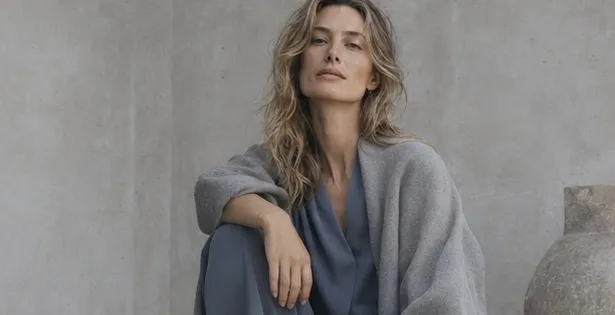
Your blue-gray sweater and cool gray pants make a natural pair. On a video call, their edges seem to merge into a single flat area. Mercury’s muted cool colors still have room for definition. One place where the eye can see a seam, a change of fabric or an opening is often enough.
Use two steps of depth
Start with a muted cool color with a little depth, like slate, and find a paler relative, like mist blue. Lay them together and step back. If you can see where one ends, you already have enough depth difference for a quiet outfit. Use the paler piece near your face and deepen the lower half, or do the reverse if a slate neckline feels more settled. A bright white shirt against dark trousers introduces a much larger change.
Look for a vertical line you already have. The front of a cardigan, a pressed seam or a shirt placket can give your eye a line to follow. If you prefer movement, let a soft hem overlap the waistband so a subtle curve does the same job. Judge the two options while wearing them. The effect of an edge on a hanger can be quite different once the fabric moves.
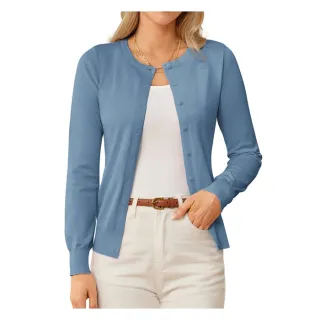
GRACE KARIN Lightweight Knit Cardigan
Blue-grey
The blue-gray cardigan works as a bridge between pale gray and slate. Wear it open if you want the button placket to stand out.
View on Amazon (paid link)Choose the kind of edge you want
Mercury CSL can use a long, clean jacket or substantial cuff as the anchor. CSP can sharpen the image with a neat placket on a close-fitting shirt. CSR can use a large panel of draping blue-gray fabric, keeping the change in movement visible. CSD can work with a small softly folded neckline or a narrow overlapping hem. Texture and scale work independently from softness of color.

Where definition comes from
| Keep the palette | Change one thing |
|---|---|
| Mist and slate | Open the front to show a vertical stripe. |
| Two similar blue-grays | Introduce a pleat or woven texture. |
| Cool gray on cool gray | Use a visible cuff or a slightly deeper hem. |